Source Sport Off Road Motorcycle for Racing, Trail, and Mud
Find 30 sport off road motorcycle listings with varying engine displacements from 249.9cc to 449cc. Buyers can compare specifications like power, torque, and weight to identify suitable options for racing, trail riding, or mud terrain.
Key considerations
Products List


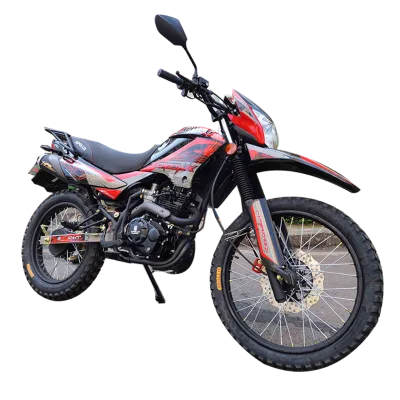


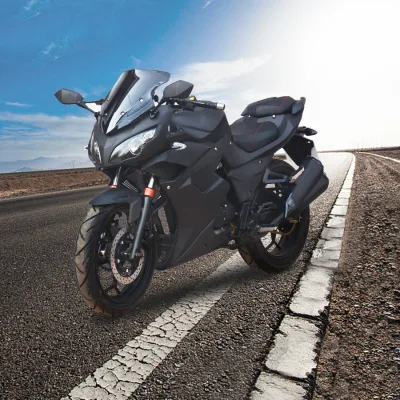
Comprehensive Sourcing Guide
Strategic Sourcing Guide for Sport Off-Road Motorcycles
Understanding the Technical Landscape of Displacement and Performance
When sourcing sport off-road motorcycles, buyers must first navigate the critical relationship between engine displacement, power output, and intended terrain. The market presents a distinct bifurcation between high-displacement machines designed for maximum speed and torque, and mid-range units optimized for agility and fuel efficiency. Based on current product observations, the high-performance segment is characterized by a displacement exceeding 250cc, with specific models featuring a 449cc engine. This configuration delivers a maximum power output of 32kW at 8500r/min and a peak torque of 38N·m at 7000rpm, enabling a top speed of 125km/h. The bore and stroke dimensions for this class are recorded at 94.5mm by 64mm, indicating a design focused on robust power delivery suitable for aggressive trail riding or motocross applications.
In contrast, the mid-range segment offers versatility for riders who prioritize maneuverability over raw horsepower. Products in this category display displacements ranging from 249.9cc to 279.5cc. For instance, a 249.9cc unit produces 14kW at 8000r/min with 18N·m of torque, reaching a maximum speed of 107km/h. Another variant in this bracket, a 271.3cc model, achieves 14.5kW at 7500r/min and 20.5N·m of torque, with a top speed of 110km/h. The bore and stroke for these engines vary, with common configurations including 72mm x 61.4mm and 75mm x 61.4mm. These specifications suggest a balance between weight reduction and sufficient power for technical terrain. Buyers should verify the ignition type, as the observed data includes both CDI and EFI systems, which impacts maintenance complexity and fuel efficiency. The fuel type is generally listed as Gas or Diesel, requiring verification of the specific engine architecture to ensure compatibility with local fuel standards.
Critical Physical Dimensions and Chassis Specifications
The physical footprint of a sport off-road motorcycle dictates its handling characteristics and suitability for specific rider heights and track conditions. The wheelbase is a primary determinant of stability; observed models range from 1380mm to 1485mm. A shorter wheelbase, such as the 1380mm found on the 300cc class, typically offers sharper turning capabilities, beneficial for tight, technical trails. Conversely, the 1485mm wheelbase on the 449cc model provides enhanced straight-line stability at higher speeds. Ground clearance is equally vital for off-road capability, with observed values spanning from 320mm to 340mm. A clearance of 340mm suggests superior ability to navigate large obstacles without undercarriage damage, while 320mm remains adequate for standard trail riding.
The overall dimensions, including length, width, and height, are critical for logistics and storage. The observed product standards indicate a length of approximately 2170mm for the larger displacement model, with a width of 820mm and a height of 1280mm. Smaller models exhibit slightly reduced dimensions, such as a length of 2090mm and a width of 830mm. The net weight of these machines varies significantly, ranging from 113kg to 126kg. A lighter frame, such as the 113kg unit, enhances rider control and reduces fatigue during long rides, whereas the 126kg model may offer a more robust feel due to larger components. Tire specifications also play a role in traction; the front tire is consistently observed as 80/100-21, while rear tires vary between 110/90-18, 110/100-18, and 120/100-18. Buyers must match tire width to the expected terrain, as wider rear tires provide better grip on loose surfaces.
Compliance Verification and Standardization Protocols
Ensuring that sourced motorcycles meet international and local regulatory standards is a non-negotiable aspect of B2B procurement. While specific certification bodies are not listed in the provided data, buyers must verify that the manufacturer adheres to recognized safety and emission standards. The product origin is identified as Chongqing, China, a major hub for motorcycle manufacturing. When sourcing from this region, it is essential to confirm that the production facilities comply with the export standards of the destination country. This includes verifying the validity of the product standard dimensions and ensuring that the manufacturing process aligns with quality management systems.
The product packing is specified as a wooden box, which is a standard requirement for international shipping to protect the vehicle from damage during transit. However, buyers should confirm that the wooden packaging meets international phytosanitary standards to prevent customs delays. Additionally, the engine oil capacity is a critical maintenance parameter, with observed values of 1.1L for smaller engines and 1.7L for the larger 449cc model. This variance must be accounted for in the spare parts inventory planning. Buyers should also check the battery specifications, which range from 12V 4Ah to 12V 7Ah, to ensure compatibility with the electrical system and to plan for replacement cycles. The absence of explicit certification labels in the source data necessitates a direct request for compliance documentation from the supplier before finalizing any order.
Cost Drivers and Procurement Economics
The pricing structure for sport off-road motorcycles is influenced by several key factors, including engine displacement, power output, and customization options. The observed price range in the market spans from 103 USD to 3000 USD, a wide spectrum that reflects the diversity of models available. The lower end of this range likely corresponds to the smaller displacement, lower power units, while the higher end encompasses the high-performance 449cc models with advanced features. Customization is explicitly available for these products, which can significantly impact the final cost. Buyers should clarify the scope of customization, including color options, branding, and specific component upgrades, as these variables often drive the price beyond the base unit cost.
Minimum Order Quantity (MOQ) is another critical economic factor, with observed ranges from 1 to 187 units. A low MOQ of 1 allows for smaller buyers to test the market or fulfill specific niche orders without significant capital commitment. However, higher MOQs, such as 187 units, may offer economies of scale that reduce the per-unit cost. Buyers must balance the desire for low unit costs against the risk of inventory holding. The lead time and shipping logistics, while not explicitly detailed in the provided facts, are inherent to the procurement process. The origin in Chongqing implies that sea freight is the primary mode of transport, which affects the total landed cost. Buyers should factor in the cost of the wooden box packaging and any potential tariffs or duties associated with importing from China to their specific destination.
Supplier Evaluation and Quality Assurance Framework
Evaluating suppliers for sport off-road motorcycles requires a rigorous assessment of their technical capabilities and quality control processes. Since specific supplier names cannot be recommended, buyers should focus on verifying the consistency of the product attributes listed in the specifications. The presence of multiple models with varying displacements, from 249.9cc to 449cc, suggests that the supplier has a diverse production line. Buyers should request evidence of consistent manufacturing quality across these different models. The condition of the products is listed as "New," but this should be verified through on-site inspections or third-party audits to ensure that the units are not refurbished or damaged.
Quality control should extend to the assembly of critical components such as the engine, chassis, and electrical systems. The variation in bore and stroke dimensions, as well as the different ignition types (CDI vs. EFI), indicates that the supplier must have precise tooling and calibration processes. Buyers should inquire about the testing procedures used to validate the maximum power and torque figures. For example, the 32kW output at 8500r/min for the 449cc model should be verified against actual performance tests. Additionally, the net weight and ground clearance figures must be measured to ensure they match the specifications provided. A robust quality assurance framework will include regular sampling and testing of finished goods to maintain consistency and reliability.
Long-Term Procurement and Maintenance Considerations
Sourcing sport off-road motorcycles is not merely a transactional event but a long-term partnership that requires planning for maintenance and support. The availability of spare parts is crucial, especially for components like tires, batteries, and engine oil. The observed tire sizes and battery capacities provide a baseline for inventory planning, but buyers should ensure that the supplier can supply these parts consistently over the product's lifecycle. The engine oil capacity differences between models mean that maintenance schedules and fluid requirements will vary, necessitating clear communication with the end-users.
Customization options offer a strategic advantage for buyers looking to differentiate their offerings in the market. However, the long-term viability of these customizations depends on the supplier's ability to maintain the modified specifications. Buyers should also consider the impact of the fuel type on the motorcycle's longevity and performance. If the engine is designed for diesel, the availability of high-quality diesel fuel in the target market becomes a critical factor. Finally, the packaging and shipping standards must be maintained to ensure that the motorcycles arrive in perfect condition. The wooden box packaging is a standard practice, but buyers should verify that the supplier uses high-quality materials to prevent damage during the shipping process. By focusing on these long-term considerations, buyers can build a sustainable supply chain that supports the ongoing success of their sport off-road motorcycle business.
FAQs
What customization options are available for these bikes?
Customization is available for these sport off-road motorcycles. Buyers can request specific modifications to suit their market needs, though the exact scope of changes must be confirmed directly with the supplier before placing an order.
Which engine displacement options are offered in this catalog?
The catalog offers engines ranging from 249.9cc to 449cc. Specific models include a 449cc unit with 32kW power and smaller variants like the 249.9cc and 271.3cc models designed for agility and fuel efficiency.
How does the wheelbase affect handling on these motorcycles?
Wheelbase lengths vary from 1380mm to 1485mm depending on the model. Shorter wheelbases like 1380mm offer sharper turning for technical trails, while longer ones like 1485mm provide stability at higher speeds.
What is the origin location for these sport off-road motorcycles?
The products originate from Chongqing, China, a major manufacturing hub. Buyers should verify that the facilities in this region comply with the export standards and safety regulations required for their specific destination country.
Can I find models with a minimum order quantity of one unit?
Yes, the observed minimum order quantity range starts at 1 unit. This allows smaller buyers to test the market or fulfill niche orders without committing to large inventory volumes immediately.
What are the standard packaging requirements for international shipping?
The standard packaging for these motorcycles is a wooden box. This method protects the vehicle during transit, but buyers must ensure the packaging meets international phytosanitary standards to avoid customs delays.